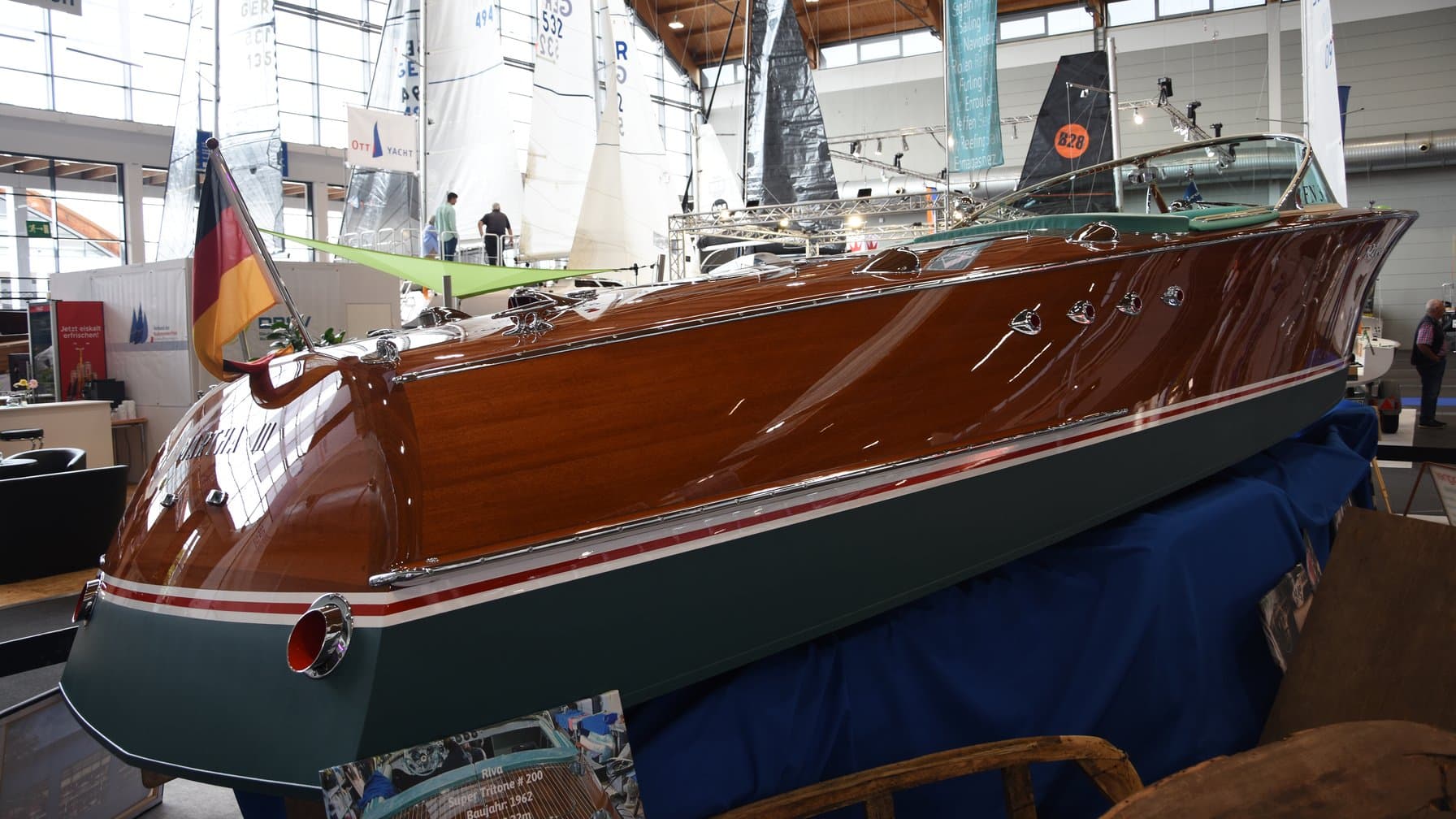
How to Buy a Boat at a Boat Show
Learning how to buy a boat at a boat show starts with seeing the show floor for what it is: the one week of the year when several dealers, several brands and the manufacturers behind them compete for your signature under one roof. That competition is real leverage — but only for buyers who arrive with a budget, a shortlist and financing already arranged. Everyone else negotiates against a countdown clock.
Why Winter Boat Shows Are a Buying Window
Show season compresses into the first quarter: dealers need orders booked before spring, and manufacturers put money behind them. The 2027 calendar is tight: Atlanta runs January 7–10 at the Georgia World Congress Center, New York follows January 20–24 at the Javits Center, the Discover Boating Miami International Boat Show takes over four Miami Beach venues February 10–14, and NMMA's new Discover Boating DTX Boat Show in Dallas closes the season March 18–21 at the Kay Bailey Hutchison Convention Center.
The official Minneapolis show site states the mechanism plainly: you can shop several dealers and brands in one place, and "boat and engine manufacturers often offer incentives in order to book sales well before the high season." Those incentives are the raw material of the show deal — and a dealer chasing a volume target on the final weekend will trade margin for a signature.
| 2027 winter show | Dates | Venue |
|---|---|---|
| Discover Boating Atlanta Boat Show | January 7–10, 2027 | Georgia World Congress Center, Atlanta |
| Discover Boating New York Boat Show | January 20–24, 2027 | Javits Center, New York |
| Discover Boating Miami International Boat Show | February 10–14, 2027 | Miami Beach (four venues) |
| Discover Boating DTX Boat Show (new) | March 18–21, 2027 | Kay Bailey Hutchison Center, Dallas |
How to Buy a Boat at a Boat Show: Do the Homework First
Every good show deal is decided before the show. Discover Boating's buyer guide gives our first instruction too: set a budget before you go, before a salesperson does that math for you.
Set the number you will not cross
Your budget is the out-the-door number — boat, options, freight, preparation, taxes, registration, and the first season's insurance and storage — not the placard price. Work backwards from the market: browse the boat listings in your band — say boats under $100,000 — and note asking prices. Our boat buying guide walks that step in full. A show special above your researched number is not a special.
Build a shortlist of two or three models
Shows reward focus. Pick two or three models, confirm each dealer will have one on the floor, and board all of them the same day, back to back, while the comparison is fresh. New to this? Start with our guide to buying your first boat — the show floor is the worst classroom in boating. Photograph every placard; by the third boat, memory blends them.
How Show Pricing and Dealer Incentives Actually Work
The placard price is usually MSRP minus what manufacturer and dealer have put on the table — and it is rarely the whole deal available. Three layers sit underneath it:
- Manufacturer money. Rebates, free option packages and rate subsidies the builder funds to move show volume. This layer expires with the show most often, which is why it anchors the urgency pitch — ask which incentives are manufacturer-funded, and get their end dates in writing.
- Dealer margin. The dealer's own discount, present at the showroom in March as surely as at the show in January. This layer survives "today only."
- Leftover models. A prior-model-year boat still in stock is usually the deepest discount on the floor: the dealer pays to floor-plan it while the new model year takes the attention.
Beyond price, plenty is negotiable: electronics, a trailer, extended warranty, delivery, commissioning. A dealer who cannot move another dollar on price can often move a thousand dollars of included gear. Always ask for the full out-the-door worksheet, because a fat discount paired with padded freight and prep fees is a discount in name only.
Get Pre-Approved Before You Walk In
Discover Boating's guide is blunt about the order of operations: if you can, get preapproved by a lender before you go to the show, through your bank or a specialized marine lender. Pre-approval does three jobs. It fixes your real ceiling before the sales conversation starts. It makes you the fastest buyer on the floor — a dealer sharpens a price for a signature that can actually close. And it benchmarks the finance desk: a dealer quote either beats your letter or visibly pads the deal.
Bring the numbers: approval amount, rate, term, monthly payment. Line up lenders through our finance providers before the season opens, and read our boat financing breakdown first.
Check the Show Price Against Real Listings
A show quote means nothing until it survives comparison. The same model — same year, same engines, same options — is very often already listed for sale, with Boat Deals Direct asking prices as your control group. On the floor, pull up the boat listings on your phone and compare like for like:
- Same model year, or price the difference if the show boat is a leftover.
- Same engines and options — a "cheaper" show boat missing the electronics package is not cheaper.
- Out-the-door against out-the-door: a listed used boat carries no freight or prep line; the show quote does.
- Delivery timing. A February show order may deliver in May; a listed boat can be in your slip within weeks.
If the show price wins that audit, sign calmly. If not, you still gain a researched number to negotiate against.
Deposits, Contracts and the Contingencies That Protect You
This is where show deals are quietly won or lost. Deposit amounts and refund terms are set dealer by dealer; the real risk is signing on a noisy floor with the protective clauses missing. Before money moves, the contract should carry, in writing:
A financing contingency
If your pre-approval falls through or final loan terms differ materially from the quote, the agreement should let you cancel and recover your deposit. Never let a contract assume financing you have not secured.
A sea trial and survey contingency
A show boat sits on carpet with the engines off. Make the sale conditional on a sea trial once the boat is in the water and — on any used or leftover boat — an independent marine survey at your expense. If either turns up material problems, you walk with your deposit. A dealer who resists these clauses is telling you something.
A delivery date and refund terms
Spring delivery queues are real: a February signature can mean a May launch. Get the delivery window in the contract, the remedy if the dealer misses it, and the exact conditions under which the deposit is refundable or gone. Verbal assurances are worth the carpet they were given on — if it is not in the agreement, it is not in the deal. Afterwards comes commissioning, the sea trial, closing paperwork and registration — our guide to how to register a boat covers it.
Show-Floor Pressure Tactics — and When Walking Away Wins
You will hear that the incentive expires tonight, that another buyer is circling the same boat, that this price cannot be repeated. Some of it is even true of the manufacturer layer. But Discover Boating's guidance to its own readers is the sentence to keep in your pocket: it is okay to walk away — never pressure yourself to decide at the show, especially if you are tired at the end of the day.
Walking away wins in three situations. First, when the numbers have drifted above your researched ceiling — fatigue is a pricing strategy, and day three of a show is designed to produce it. Second, when the contract lacks the contingencies and the desk will not add them; a deal that cannot survive a sea-trial clause is not a deal you want. Third, when the same boat is listed elsewhere at the same money. Boats are built by the thousand; your deposit is not replaceable.
How to Buy a Boat at a Boat Show: The Short Version
Know how to buy a boat at a boat show and the floor works for you instead of on you: research the model and its asking prices, set an out-the-door ceiling, arrive pre-approved, audit the show quote against live listings, and sign nothing without financing, sea-trial, survey and delivery terms in writing. Do that, and the show incentives in Atlanta, New York, Miami and Dallas this winter become a genuine discount on a boat you chose with your eyes open. Start the homework now in the boat listings — let the show confirm a good deal, not invent one.
Boat Show Buying FAQs
Are boats really cheaper at boat shows?
They can be: manufacturers fund show incentives before the high season, and dealers chase volume targets. But the discount is real only after comparing the out-the-door figure — price, options, freight, prep, fees, tax — against the same model listed for sale.
How much deposit do I put down on a boat at a boat show?
There is no standard figure. The amount and, more importantly, the refund terms are set by each dealer and written into the purchase agreement. What matters is that the agreement states exactly when the deposit is refundable — tied to financing, sea trial, survey and delivery — before you hand it over.
Can I sea trial a boat I buy at a boat show?
Usually not at a winter show — the boats are on the floor, not in the water. That is why the sea trial belongs in your contract as a contingency: the sale completes only after an on-water trial, and a survey where warranted. A show-floor walkthrough is never a substitute.
What if the same boat is cheaper after the show?
It happens, especially with leftover models a dealer still holds in spring. Your protection is the homework, not the calendar: if your listing comparison showed the show price was fair, a later discount elsewhere does not make yours a bad deal. And if you have not signed yet, that cheaper price is negotiating evidence — take it back to the dealer.