Dale Hollow Lake Boating Guide: Smallmouth, Marinas & Clear Water
Dale Hollow Lake boating guide: 27,700 clear acres, the world-record smallmouth, marinas, houseboats and the two-state rules of a Tennessee–Kentucky lake.
9 min readDale Hollow Lake
A Dale Hollow Lake boating guide begins with freshwater's most famous fish: the 11-pound, 15-ounce smallmouth bass David Hayes caught here in 1955, still the all-tackle world record. The lake that produced it is a 27,700-acre highland reservoir on the Obey River, straddling the Tennessee–Kentucky line — clear enough for scuba divers, and quiet enough that most of its shoreline stays undeveloped. Our roundup of the best lakes for boating lists it for the fishing; this guide covers running it.
Dale Hollow Lake Boating Guide: 61 Miles of Obey River Water
Dale Hollow backs up behind Dale Hollow Dam, a 200-foot concrete gravity dam on the Obey River about three miles east of Celina, Tennessee, and 7.3 miles above the Obey's junction with the Cumberland River. The U.S. Army Corps of Engineers' Nashville District rushed the dam to completion on October 20, 1943, for wartime flood control; the lake was fully impounded on May 7, 1944, and its three generating units followed in 1948, 1949 and 1953. The reservoir runs 61 river miles up the Obey and its East Fork, across six counties in two states.
Quote Dale Hollow by its pool. At summer pool, elevation 651 feet, the surface is 27,700 acres inside 620 miles of shoreline. At minimum power pool, 631 feet, it shrinks to 21,880 acres; at maximum flood pool, 663 feet, it spreads to 30,990 acres, with 24,842 acres of public land around the water.
| Fact | Detail |
|---|---|
| Surface area | 27,700 acres at summer pool (651 ft) |
| Shoreline | 620 miles |
| Length | 61 river miles of the Obey River |
| Minimum power pool | 21,880 acres at 631 ft |
| Dam | Dale Hollow Dam, 200 ft, near Celina, Tennessee |
| Completed | Dam completed 1943; lake impounded May 7, 1944 |
| Managed by | USACE Nashville District |
Launching and Marinas: Corps Ramps, the Marina Network and the State Park
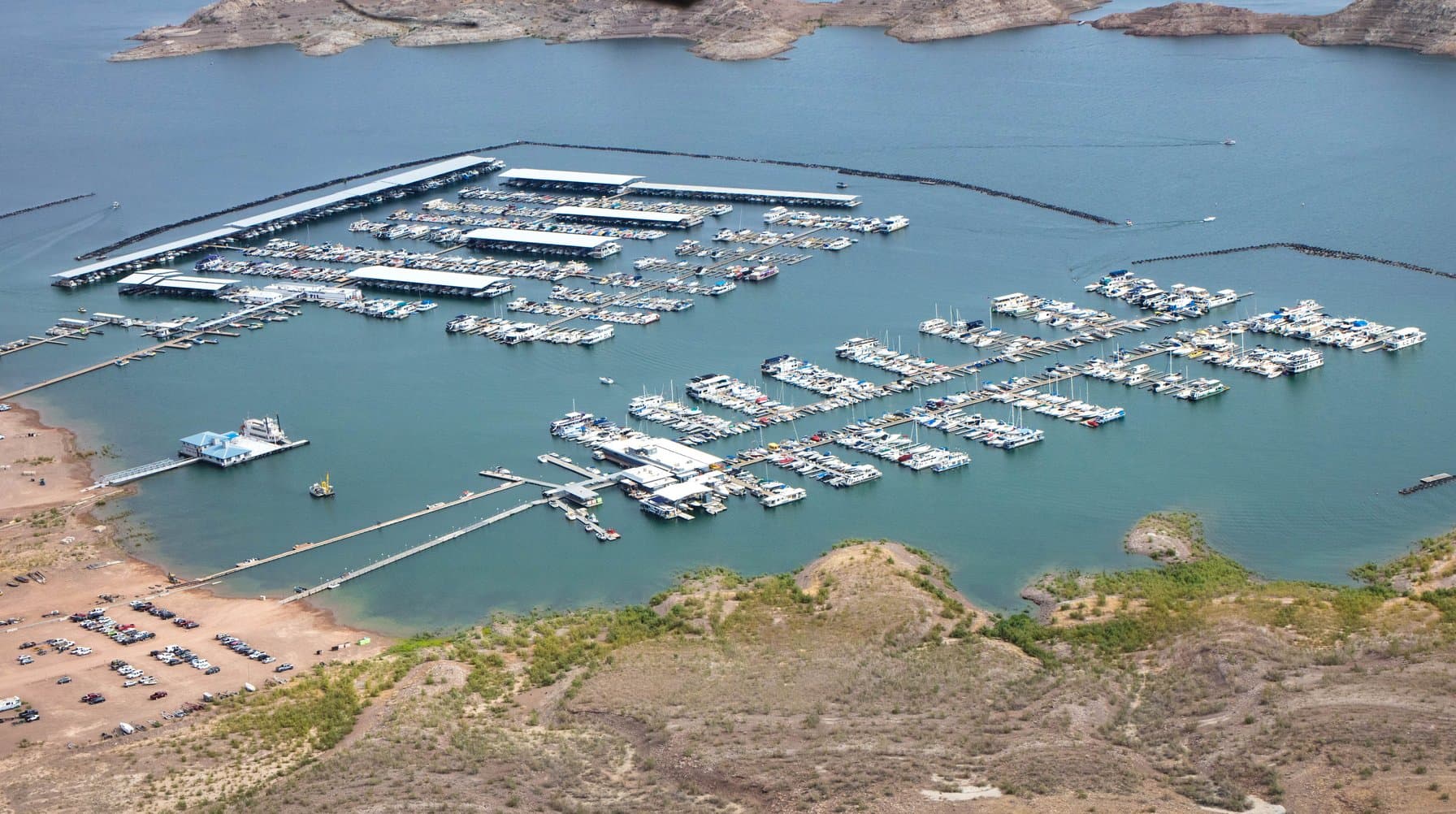
The Corps runs the public-access spine: recreation areas and campgrounds at Dale Hollow Dam, Lillydale, Obey River Park, Pleasant Grove, Willow Grove and Cove Creek, most with ramps. Day-use fees apply at three of them ($5 per vehicle; $40 annual pass). Around that spine sit more than a dozen commercial marinas — Willow Grove, Sunset, Holly Creek, Hendricks Creek, Star Point, East Port and Mitchell Creek among them — selling slips, fuel, rentals and houseboats.
The Kentucky shore holds the one full resort base: Dale Hollow Lake State Resort Park, near Burkesville with the 60-room lodge, a 144-site campground and a marina of more than 200 slips. Pick your base by arm, not amenities: the dam-end, mid-lake and Wolf River fleets rarely mix.
Where to Boat: The Main Lake, the Wolf River and the Creek Arms
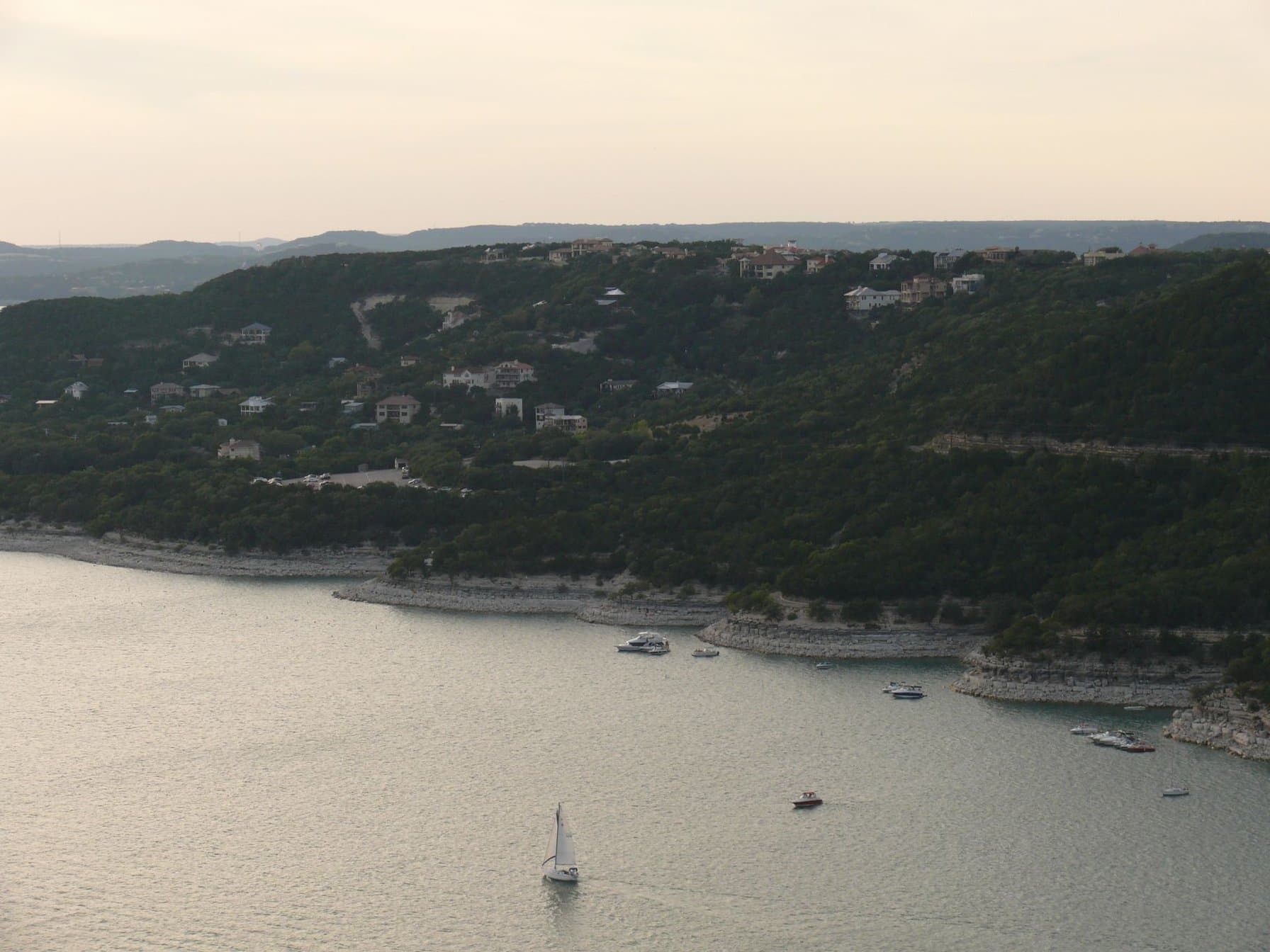
The lower lake near the dam is Dale Hollow's deep, clear heart — 130 feet of water just above the dam and the marinas of the Celina shore. This is houseboat and cruiser water, and prime smallmouth water — the trophy fishery lives on its points and gravel flats. Mid-lake, the big creek arms — Holly Creek, Mitchell Creek, Sulphur Creek — fold into quieter coves for anchoring, swimming and pontoon afternoons.
East and north, the lake narrows. The Wolf River arm reaches past Byrdstown toward the Kentucky line; anglers work it and the East Fork for the winter walleye run. Below the dam, the Obey runs cold to the Cumberland — a trout fishery stocked from the Dale Hollow National Fish Hatchery below the dam, producing about 1.5 million trout a year.
The Record Smallmouth and the Slot That Protects It
On a July morning in 1955, David Hayes of Leitchfield, Kentucky, trolling a little cut between Illwill Creek and Phillips Bottom, just north of Trooper Island in Kentucky waters, caught a smallmouth of 11 pounds 15 ounces. It became the world record, survived a bizarre afterlife — an affidavit claiming the fish had been stuffed with weights surfaced four decades later; the IGFA rescinded the record in 1996 and reinstated Hayes in 2005 — and stands today.
The modern fishery is engineered to keep producing them. TWRA's Dale Hollow page states the rule plainly: smallmouth are limited to two per day under a 16–21 inch protected length range — one may be under 16 inches and one over 21 inches, and everything between goes back. Black bass overall are five per day in combination, with a 15-inch minimum on largemouth; walleye five per day at 16 inches, crappie fifteen at 10 inches, trout seven per day.
Dale Hollow Lake Boating Guide: Two States, Two Rulebooks and One Narrow Reciprocity
The state line crosses the lake's northern arms, and the two states' rules differ. Tennessee's boating-education rule is date-based: a Tennessee resident born after January 1, 1989 must carry the TWRA Boating Safety Education Certificate to operate a motorboat. Kentucky's is age-based: operators aged 12 to 17 need the Kentucky Safe Boating Certificate for motors over 10 horsepower, and no one under 12 may operate such a motor at all. Life-jacket lines differ too — Tennessee requires children 12 and younger to wear one while underway; Kentucky's rule covers under-12s in the open part of a moving boat.
Fishing licenses have their own, narrower bridge. Tennessee–Kentucky reciprocity lapsed in 2025 and was reinstated on October 16, 2025 — but on Dale Hollow the reciprocal water is only the Wolf River arm, including the Illwill Creek embayment, from the line where the Wolf meets the Obey. As Kentucky's reciprocal-agreements page puts it, anglers fishing that arm follow their licensing state's regulations — unless fishing from the bank, when the state under your feet governs. Outside that arm, carry the other state's license.
Houseboating, Clear Water and the Town That Drowned
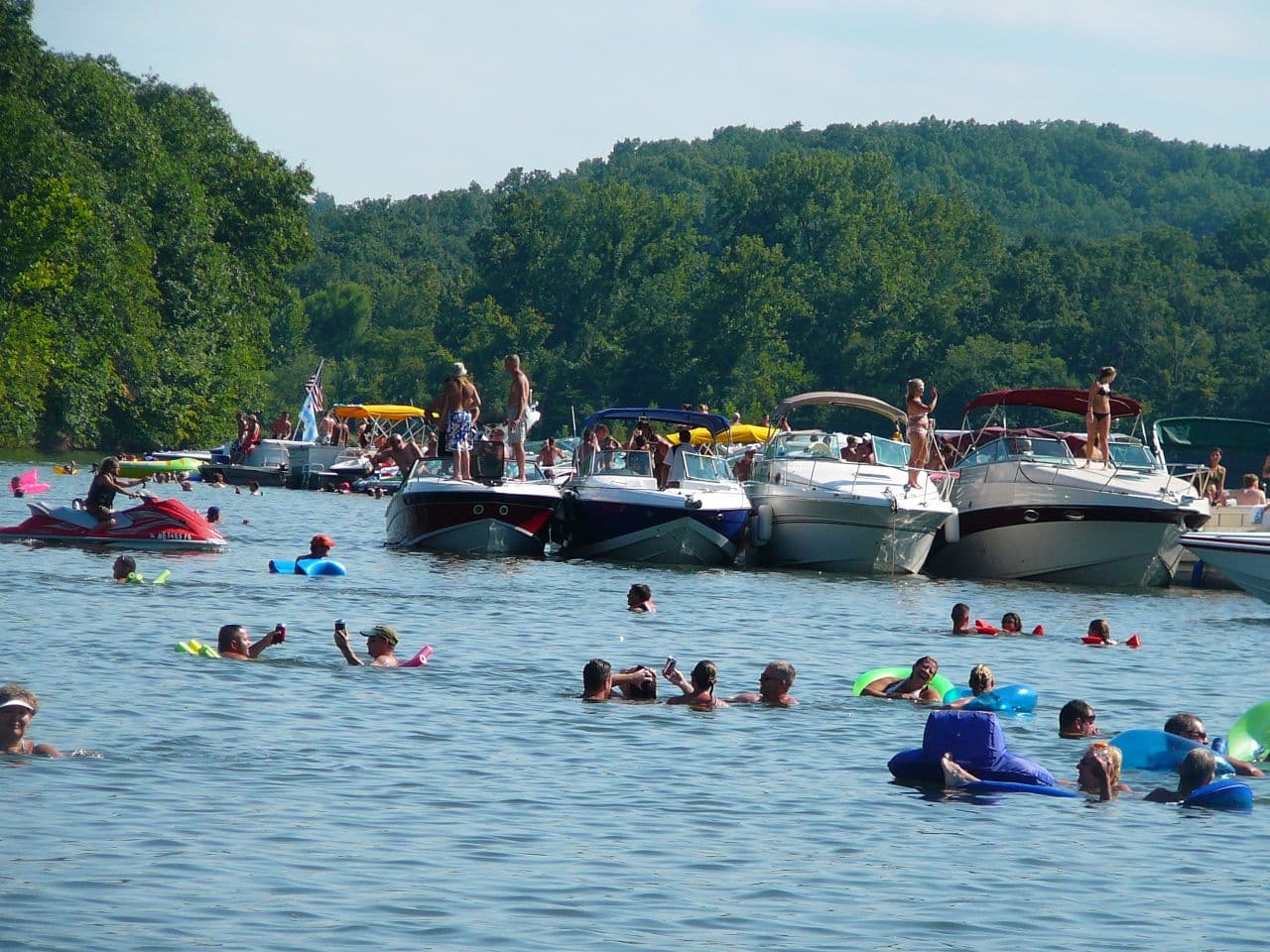
Dale Hollow's houseboat fleet is its social institution: rental boats fan out into the creek arms for long weekends of swimming, grilling and sleeping aboard — a smaller, quieter echo of the fleet in our Lake Cumberland boating guide. The clarity is the other signature: Kentucky promotes the lake as its premier scuba destination, and divers come for one ruin, the Willow Grove schoolhouse.
Willow Grove was a working town — churches, stores, a large school — bought by the federal government in 1942 ahead of the rising water; locals still call it the town that drowned. Its schoolhouse foundation is the best-known dive site, and in low water its outline shows through the clear water from the surface. The name survives on the Corps campground and marina ashore.
Best Boats for Dale Hollow Lake
Fishing boats come first on a lake with this record book: a bass hull with good electronics for the deep points, or a multi-species boat for trolling and the East Fork walleye run. Browse the fishing boat listings with the slot limit in mind — this is catch-and-release trophy water, so a clean release at the boat's side matters more than livewell size. Pontoons and tritoons own the creek-arm afternoons; start from the pontoon listings for one that can cross the main lake when the wind builds.
Houseboats are the third fleet, rented far more often than owned here, but the used market exists — owners shopping the format browse plain boat listings, since houseboats carry no type filter. If the right boat sits in another state, the transportation providers directory covers hauling it to the Highland Rim.
Buying a Boat for Dale Hollow: Slips, Winter Pool and the Keeping Question
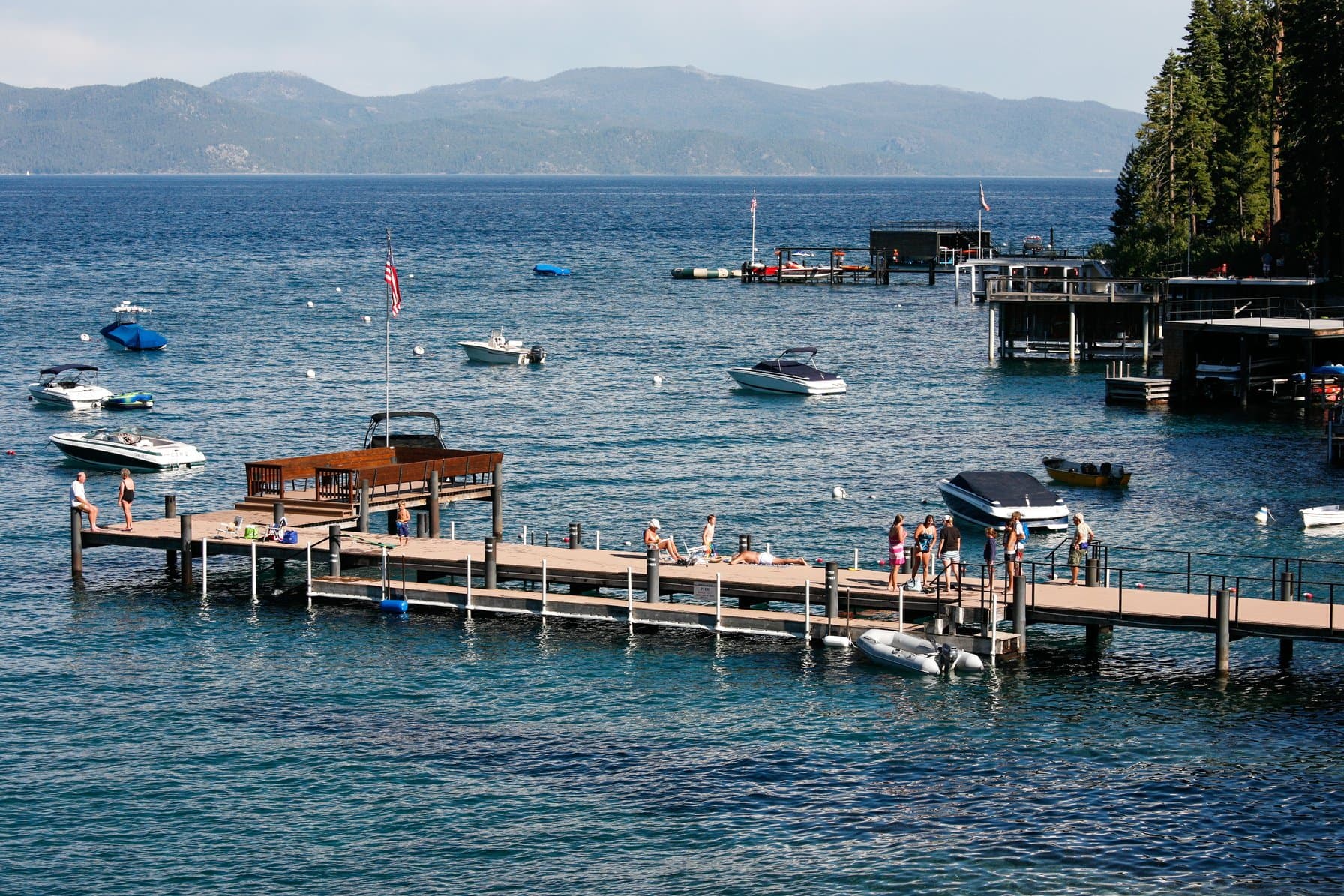
Dale Hollow ownership starts with the swing. The Corps puts average annual fluctuation at about 14 feet, summer's 651 falls toward the mid-630s in a typical winter. Fixed docks are rare for a reason — the working arrangements are floating docks, marina slips that ride the pool, or a trailer and a ramp built for the drawdown. Ask every seller where the boat sits in February.
Slips are the scarce good, and a boat bought without a keeping plan becomes a trailer boat by default. Winterisation is standard at this elevation; arrange cover before closing through the insurance providers directory. Replacing a boat you already own? List it for sale before the spring market opens.
Dale Hollow Lake Boating Guide FAQs
Which fishing license do I need on Dale Hollow Lake?
The license of the state whose water you are fishing — with one exception. Inside the reciprocal zone (the Wolf River arm, including Illwill Creek, from its mouth on the main lake), either state's license is recognised, and you follow your licensing state's regulations from a boat. Bank anglers follow the state they are standing in. The agreement was reinstated on October 16, 2025.
Why is Dale Hollow's smallmouth slot 16 to 21 inches?
Because the lake grows the world's biggest smallmouths and the slot is how it keeps doing so. Fish between 16 and 21 inches — the prime breeding class — must be released; an angler may keep two smallmouth a day, only one under 16 inches and one over 21. The rule has held the fishery that produced the 1955 record at the top of the sport for seventy years.
How much does Dale Hollow Lake's level change?
About 14 feet in an average year, on the Corps' own accounting, from summer pool at 651 feet down toward the mid-630s in winter — with flood storage able to push the lake to 663 feet. Ramps, floating docks and gangways are engineered for that range, and late-winter shorelines look entirely different from July's.
What is the town under Dale Hollow Lake?
Willow Grove, Tennessee — a community of churches, stores and a large school, bought by the federal government in 1942 and submerged as the lake filled in 1943–44. Its schoolhouse foundation remains on the bottom, visible through the clear water at low pool; the campground and marina keep the name on the modern shoreline.
Bottom line: this Dale Hollow Lake boating guide reduces to one habit — learn the lake by its arms and its elevations, not by its map outline. Choose a home arm, respect the slot, carry the right state's paperwork, and search the fishing, pontoon and houseboat listings at BoatDealsDirect.com for the hull that fits a clear, quiet, record-holding lake.