Best VHF Radios: Fixed-Mount and Handheld Picks Ranked
Six VHF radios ranked on DSC class, GPS and AIS — three fixed-mount sets and three handhelds from Standard Horizon, Icom and Garmin.
9 min readGear & Accessories
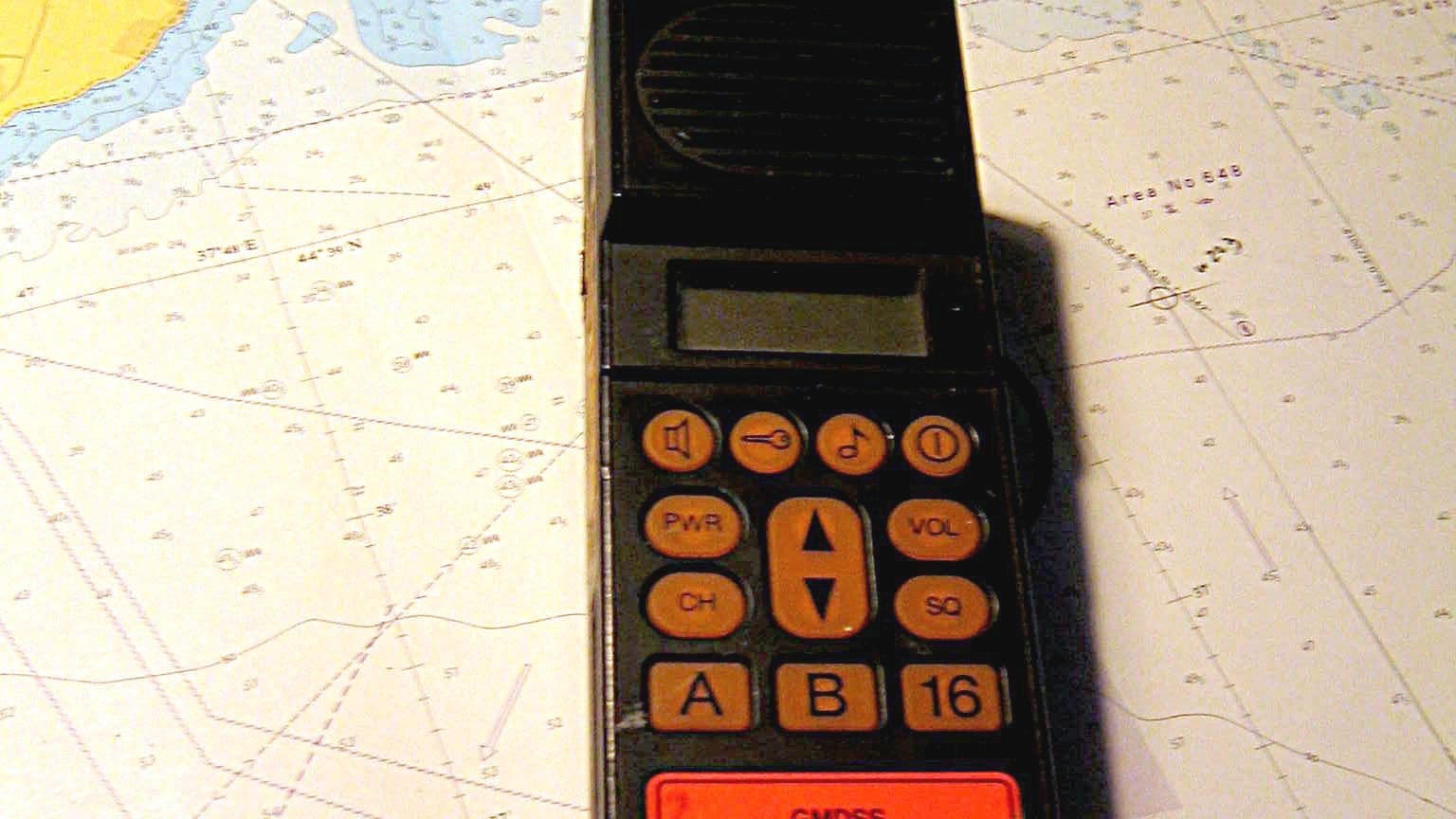
The best VHF radios earn the title before they ever carry a conversation: in the first seconds of an emergency, when a distress call has to leave the boat carrying your identity and your position even if nobody can reach the microphone. Judged on that job, the field separates quickly: every fixed-mount pick pairs full Class D DSC with a real GPS position source, handhelds are held to the same standard, and two of the six add AIS. Here is what separates them.
How These VHF Radios Were Ranked
This ranking is built from the manufacturers' own published specifications and owner's manuals, checked against FCC rules and Coast Guard guidance. No radio was bench-tested, loaned or trialled for this guide, with no invented scores: where a figure could not be confirmed in the maker's own material it was left out, and where sources disagreed, the manufacturer won. Prices are approximate US street prices at the time of writing. The order is deliberate: DSC class and position source first; AIS and networking second; waterproofing, audio and warranty after that.
What Makes a VHF Radio a Safety Radio: DSC, MMSI and GPS
A marine VHF is two radios in one box. Voice works the familiar channels: 16 for distress and calling, 9 for recreational calling. The digital side, DSC, lives on Channel 70 (156.525 MHz) and does the job voice cannot: one press of the guarded red button broadcasts your identity and, if the radio knows where it is, your exact position to the Coast Guard and every DSC boat in range.
Class D decides whether that call gets heard. A Class D set carries a dedicated Channel 70 receiver, listening even mid-conversation; older SC-101 sets shared one receiver and could miss alerts. The FCC closed that gap: since March 25, 2011 it has been illegal to manufacture, import, sell or install a fixed-mount DSC radio that does not meet the Class D standard, and portables followed on March 25, 2015 — the Coast Guard's DSC special notices carry the ruling.
Two free steps make the system work. The first is an MMSI, the nine-digit number tied to your vessel: free from BoatUS for US-only boats; foreign-port boats need an FCC ship station license and FCC-issued MMSI. The second is position — a DSC alert from a radio with no GPS input carries no coordinates. In a letter to the NMEA, the Coast Guard reported roughly 90 percent of DSC alerts arriving with no position and about 60 percent with no registered MMSI. Every pick below builds GPS in.
The Best Fixed-Mount VHF Radios
A fixed-mount set is the boat's primary radio: 25 watts, the house battery, an antenna mounted high. Three picks split the field by what else they do at the helm.
Standard Horizon GX2400 — Best Overall
The GX2400 is the most complete radio here at roughly $400. Its Class D DSC (to the ITU-R M.493-15 revision) runs off a built-in 66-channel GPS receiver, so its distress call always carries a position. A dual-channel AIS receiver plots Class A and Class B targets on the radio's own display — name, call sign, bearing, distance, speed and course — with closest-point-of-approach alarms, and NMEA 2000 and NMEA 0183 outputs feed a chartplotter. Add an IPX8 rating, a 30-watt loud hailer with fog signals, a second station option, and a three-year waterproof warranty.
Icom IC-M330G — Best Compact Value
Icom's answer to the crowded helm is size: at 156.5 × 66.5 × 110.1 mm the M330G is palm-sized, the smallest footprint here. It transmits the full 25 watts, its DSC is Class D with the same continuous Channel 70 watch, and its built-in GPS receiver — fed by a supplied external puck reading GPS, GLONASS and SBAS — means distress calls carry position. It is rated IPX7, and AquaQuake vibrates water out of the speaker grille. The honest trade is networking: NMEA 0183 only, no NMEA 2000 port. At roughly $230 against a $399 list, it is the cheapest route to a compliant helm radio.
Garmin VHF 215 AIS — Best for a Networked Helm
Garmin builds the VHF 215 AIS for boats already running its electronics — $749.99 on Garmin's own site. The fundamentals are present — 25 watts, Class D DSC, built-in GPS — and its AIS receiver takes a different philosophy from the GX2400's: targets display on the paired chartplotter, not the radio. If that helm runs one of the best chartplotters, the radio joins it over NMEA 2000 in minutes. A 20-watt hailer, an optional GHS 11 second-station handset and an IPX7 rating round it out. You are paying for integration, not raw radio — in an all-Garmin helm, that is the point.
The Best Handheld VHF Radios
A handheld leaves the boat with you — dinghy, ditch bag, bow. Six watts is the class ceiling and the antenna is short, so range shrinks; the distress capability should not, and that is where this field splits.
Icom IC-M94D — Best Handheld, With AIS
The IC-M94D was the first handheld with an AIS receiver, and remains the only one here: vessel traffic draws on its display, and the AIS target-call function turns a target on screen into a DSC call. Its Class H DSC pairs built-in GPS with a rear-panel distress button. Icom rates its speaker at 1,500 mW, the class's loudest; the supplied 2,400 mAh battery runs roughly 10 hours; and the set floats with a flashing light (Float'n Flash), reframing a distress call as a man-overboard alert in the water. IPX7 sealing and AquaQuake complete a set that behaves like a fixed radio. At roughly $400, it costs like one too.
Standard Horizon HX891BT — Best DSC Handheld
If AIS is the one feature you can live without, the HX891BT is the handheld to buy. Its Class H DSC keeps a continuous Channel 70 watch, a 66-channel WAAS GPS receiver feeds position to every call, and it adds the one trick nothing else here has: Bluetooth hands-free operation through a headset. It transmits at 6, 2 or 1 watts, is submersible to IPX8 and floats, meets MIL-STD-810F, and lights a water-activated strobe when it goes overboard. Waypoint navigation and the GX2400's three-year waterproof warranty fill out the package at roughly $250 — the line's current flagship, succeeding the HX890.
Standard Horizon HX210 — Best Budget Backup
The HX210 enters with its limitation first: no DSC, no GPS, no AIS — it cannot send your position or raise a digital distress alert, and as an only radio offshore it is not enough. As the second radio it is close to perfect: 6 watts, a floating IPX7 case, a 1,850 mAh battery and the same three-year warranty, at roughly $140. In the ditch bag beside the best life jackets or clipped in the dinghy, it is the cheapest insurance in this guide — with a DSC set as the primary.
Best VHF Radios at a Glance
The six picks side by side — every figure argued in the prose around it.
| Radio | Mount | Transmit power | DSC and position | US price (approx.) |
|---|---|---|---|---|
| Standard Horizon GX2400 | Fixed-mount | 25 W | Class D DSC, built-in GPS, AIS receiver | $400 |
| Icom IC-M330G | Fixed-mount | 25 W | Class D DSC, built-in GPS | $230 |
| Garmin VHF 215 AIS | Fixed-mount | 25 W | Class D DSC, built-in GPS, AIS receiver | $749.99 |
| Icom IC-M94D | Handheld | 6 W | Class H DSC, built-in GPS, AIS receiver | $400 |
| Standard Horizon HX891BT | Handheld | 6 W | Class H DSC, built-in GPS | $250 |
| Standard Horizon HX210 | Handheld | 6 W | None | $140 |
Fixed-Mount or Handheld: Range, Antennas and Honest Limits
VHF is a line-of-sight system, and range claims should be read through that fact. The Coast Guard's own guidance puts typical VHF reach at 5 to 10 miles between boats, and at least 20 miles to a Coast Guard station. A fixed set's antenna at the top of a T-top or arch sees a horizon several miles farther than a handheld's stub antenna at chest height, and pairs that height with 25 watts instead of 6. The working rule: the fixed set is primary — wired, powered and tall — and the handheld is the backup that works with the boat's electrics dead, beside the rest of your boat accessories essentials. Boats that carry only a handheld are betting their longest call on their shortest antenna.
Best VHF Radios FAQs
Is a VHF radio required on a recreational boat?
For most recreational boats, no — carriage is voluntary, and federal rules do not require one under 65.5 feet. Voluntary is not optional in practice: a phone has no coverage guarantee offshore and cannot call the boat next to you. With a VHF aboard and on, keep a watch on Channel 16 or 9.
What is DSC, and why does the GPS connection matter?
DSC is the digital side: a Channel 70 data burst carrying your MMSI and, with a position source, your coordinates. A voice Mayday tells rescuers what you say; a DSC alert tells them where you are even if you say nothing — and with no GPS input, that position is blank.
How far does a marine VHF radio actually reach?
Plan on 5 to 10 miles boat to boat, and 20 miles or more to a Coast Guard station. Height beats power: an antenna on a T-top sees miles farther than one at chest height, so the fixed set out-reaches the handheld several times over.
Do I need a license or an MMSI number?
No license: recreational boaters using VHF in US waters need no FCC license or permit. That changes for foreign ports, or HF and satellite gear. The MMSI is separate and worth five minutes — free from BoatUS for domestic use, it is the identity your distress call broadcasts, shared by every radio on the boat.
The Bottom Line
The best VHF radios are the ones that make the worst five minutes simple: a Class D set at the helm with GPS in its distress call, an MMSI registered up front, and a handheld that can back it up without borrowing the boat's power. Fit one, clip a DSC handheld to the ditch bag, and the radio question closes. What remains is the enjoyable part — choosing the boat it all bolts onto.